That knee that flares up after a long run, the shoulder that never quite settles after training, or the stubborn area you want to target without surgery all call for a more precise approach. This localized cryotherapy treatment guide breaks down how targeted cold therapy works, what it can support, and how to decide whether it fits your recovery or aesthetic goals.
Localized cryotherapy directs controlled cold air to one specific area rather than exposing the entire body to cold. The treatment is fast, non-invasive, and designed around the problem area – whether that is a sore joint, tight muscle, post-workout hotspot, or an aesthetic concern. For Miami clients who want professional care without adding another stop to the day, mobile treatment brings that focused support to you.
What localized cryotherapy actually does
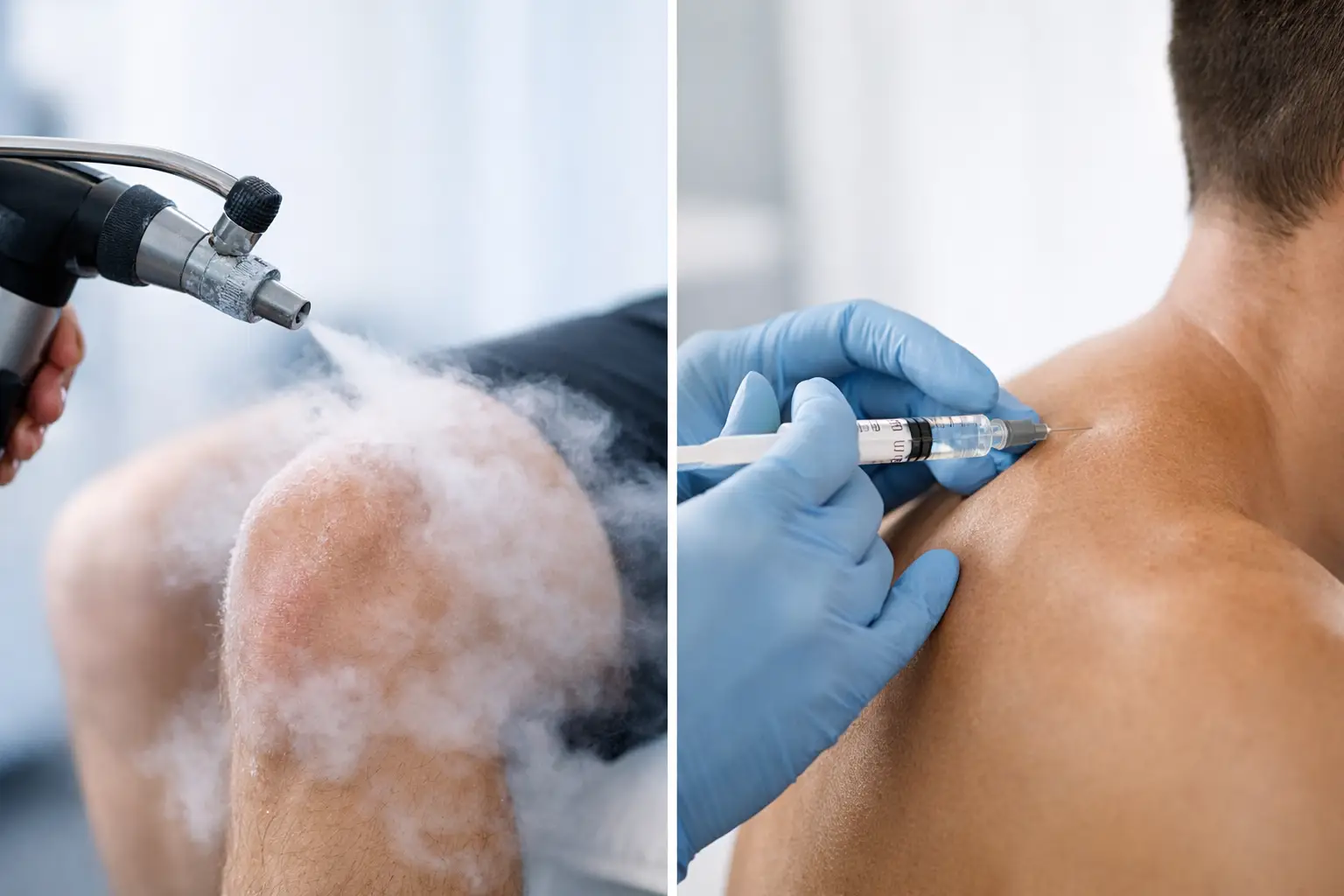
During a session, a trained provider applies very cold, dry air to the chosen treatment area for a short, controlled period. The cold causes surface blood vessels to constrict temporarily. When the area rewarms, circulation returns, which can leave the area feeling calmer, lighter, and less irritated.
The immediate effect many clients notice is a reduction in pain sensitivity and a refreshing numbness around the treated area. That can be especially useful when swelling, soreness, or overuse is getting in the way of movement. Localized cryotherapy is not a diagnosis or a replacement for medical care, but it can be a practical recovery tool alongside a clinician-approved plan.
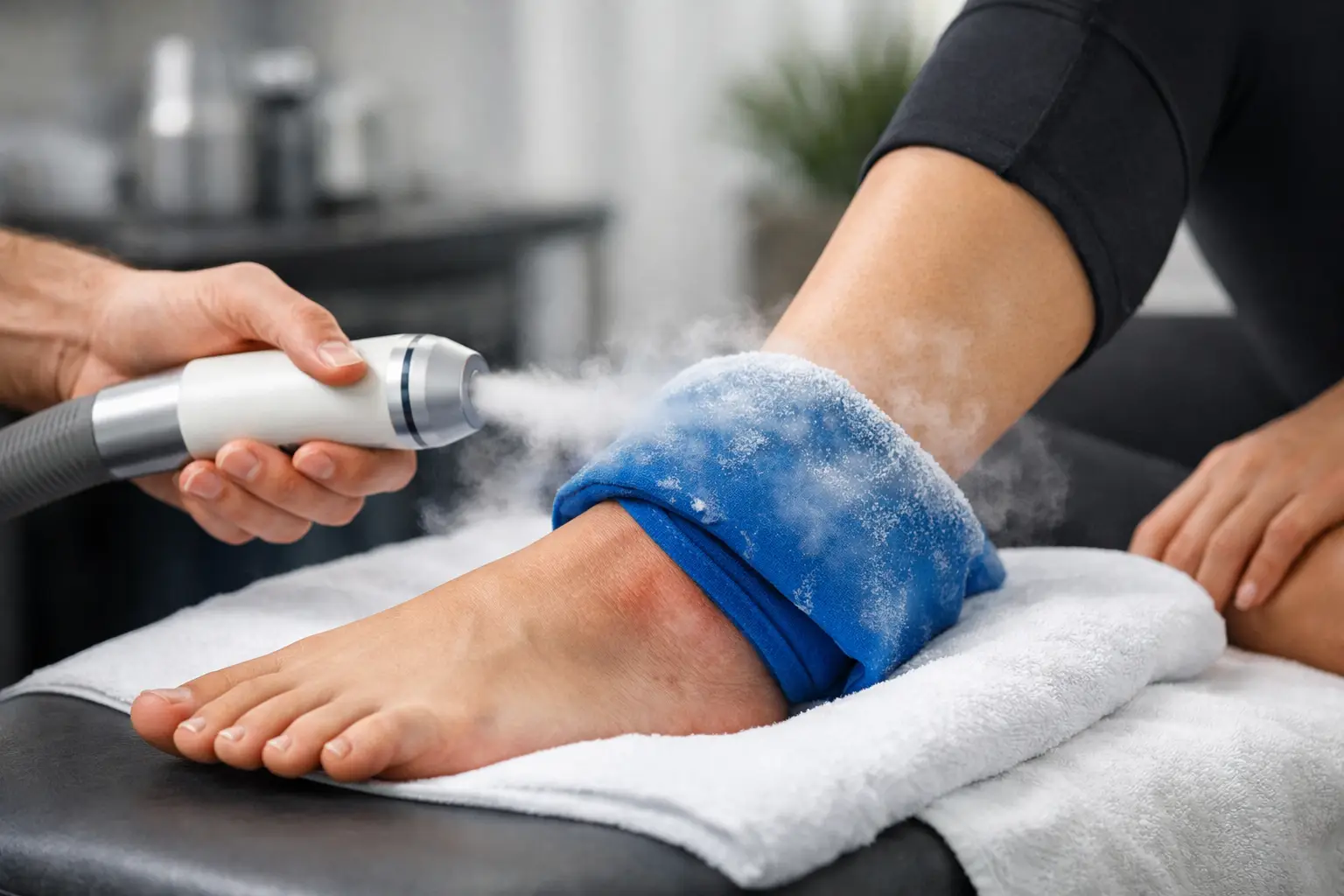
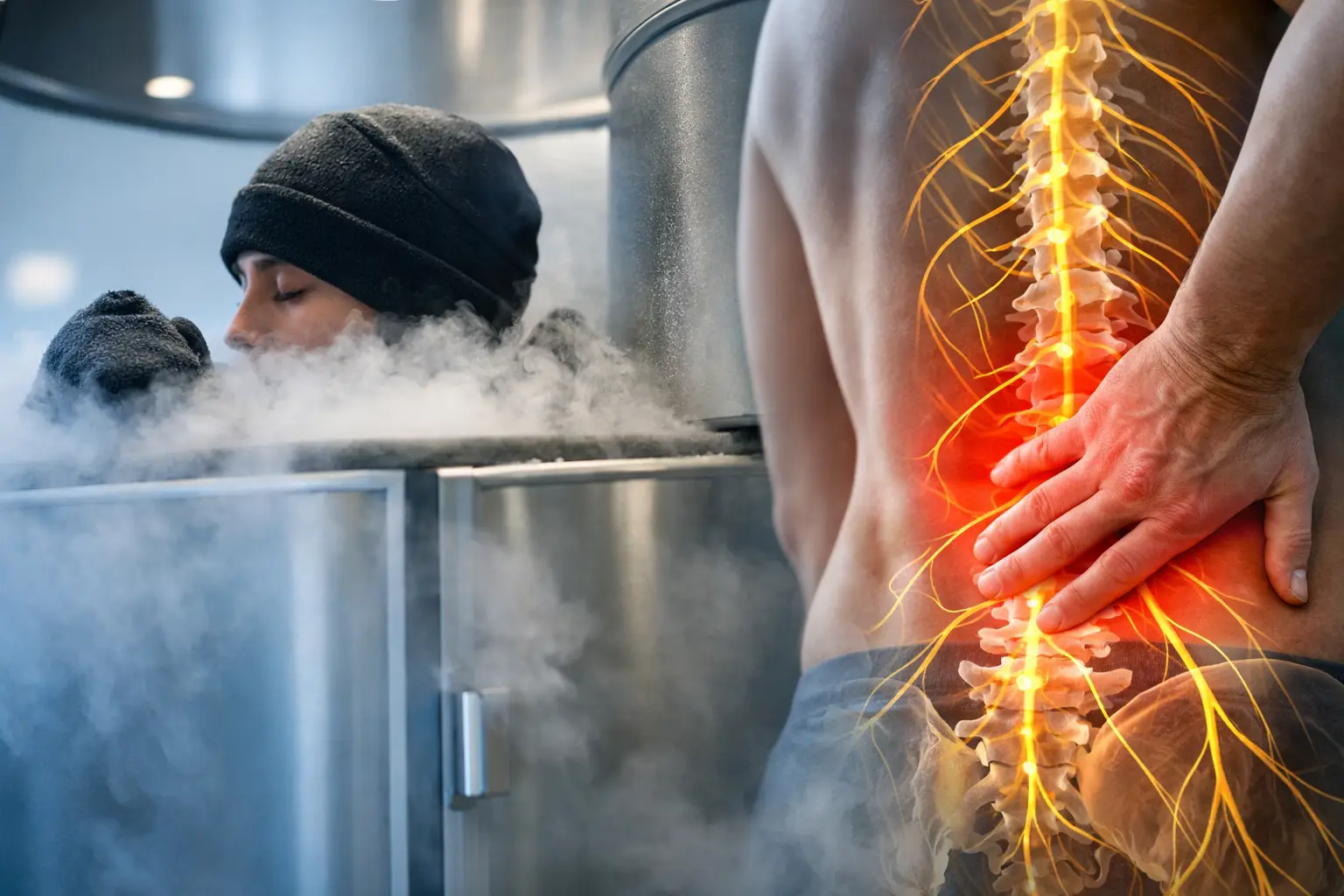
The difference is precision. Whole-body cryotherapy treats the body broadly. Localized treatment concentrates on the place asking for attention, allowing a provider to work around a specific knee, ankle, shoulder, elbow, lower back area, or muscle group.
Who can benefit from targeted cold therapy?
Localized cryotherapy works best when the goal is clear. An athlete may use it after an intense training cycle to manage localized soreness. A busy professional with recurring neck or low-back tension may use sessions to feel more comfortable moving through the week. Someone recovering from a strain or orthopedic procedure may use cold therapy as part of a broader recovery routine, with clearance from their medical provider.
It is also a popular option for people who want a non-medication-based way to manage discomfort. If a painful area responds well to traditional icing but an ice pack feels awkward, inconsistent, or too time-consuming, targeted cryotherapy may offer a more controlled alternative.
Common recovery-focused uses include support for acute and chronic joint discomfort, muscle soreness, sports recovery, localized inflammation, and post-exercise fatigue. Results vary by condition, activity level, and the underlying cause of pain. A single session may provide short-term relief, while recurring concerns often respond better to a plan built around regular treatment, mobility work, rest, and professional guidance.
Recovery support after injury or surgery
Cold therapy has long been used in recovery settings because it can help manage soreness and swelling. Localized cryotherapy can complement a post-injury or post-surgery routine when your physician or physical therapist approves it. The key word is complement. A cold session cannot repair a torn tendon, correct a structural problem, or replace rehabilitation exercises.
If pain is severe, new, worsening, or paired with instability, numbness, fever, significant swelling, or loss of function, get medical evaluation first. Fast relief is valuable, but the right diagnosis matters more.
Localized cryotherapy for aesthetics
Targeted cold treatment is not only for sore muscles and joints. Cryotherapy-based aesthetic services may support skin revitalization, cellulite-focused routines, wrinkle reduction, and scalp treatments intended to support hair growth goals. These services are typically designed as a series because visible aesthetic changes are gradual.
Cryolipolysis is a separate body-contouring treatment that uses controlled cooling to target fat cells beneath the skin. It is not the same as a quick localized cryotherapy session for pain relief. Cryolipolysis is intended for stubborn pockets of fat, not weight loss, and results develop over time as the body processes treated fat cells. It works best for people near their preferred weight who want refinement in a specific area.
Skin and body goals deserve realistic expectations. Cold-based aesthetic treatments can support a polished wellness routine, but they do not replace nutrition, strength training, hydration, sun protection, or medical dermatology when needed.
What a session feels like
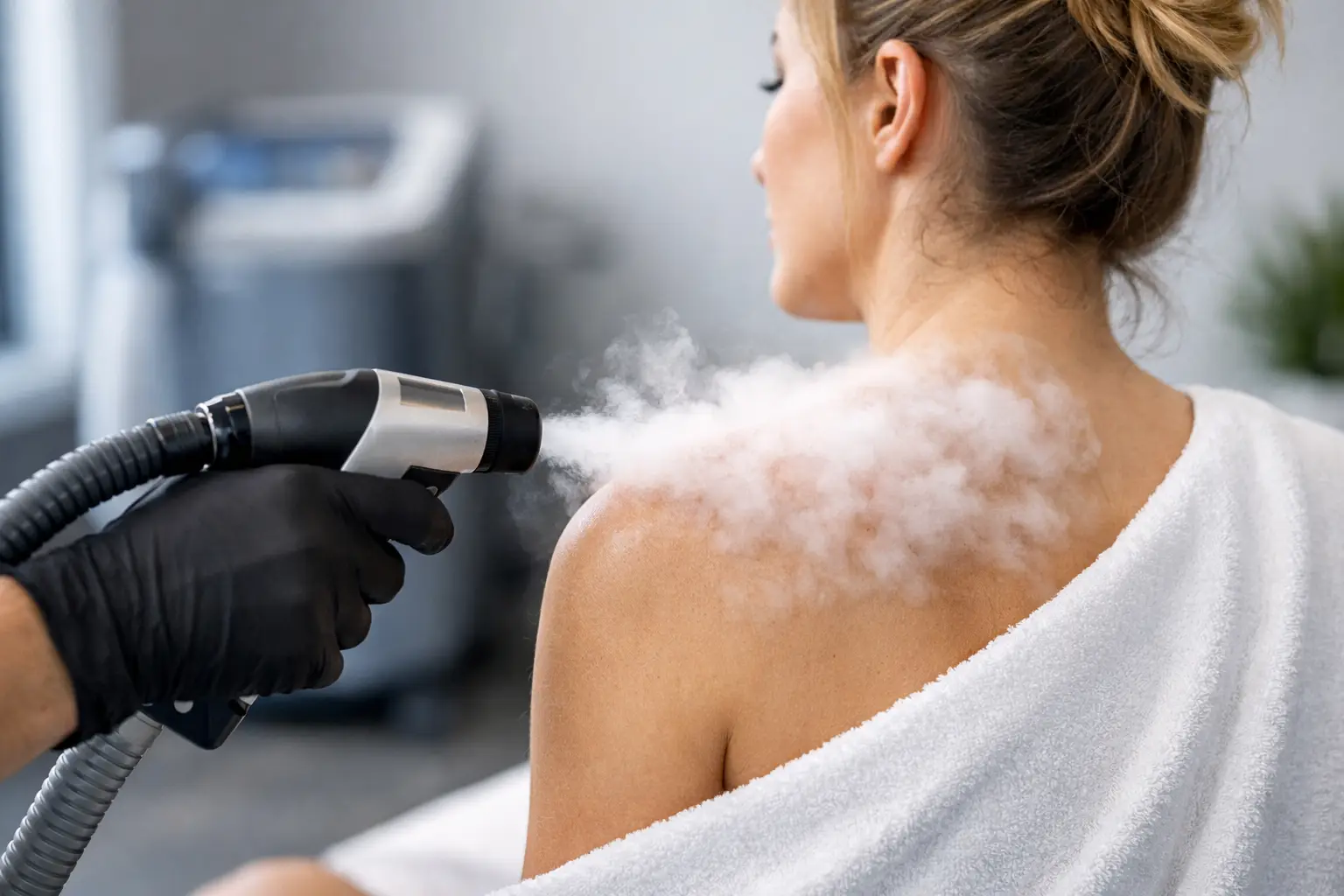
The treatment area is exposed, and your provider directs cold air across the skin in steady, controlled passes. You will feel intense cold quickly, followed by a cooling or lightly numb sensation. Sessions are brief, and most clients return to normal activity right away.
You may see temporary redness as the skin rewarms. That is common. Tell your provider immediately if the cold feels painful, burning, or intolerable. A professional session should feel controlled from start to finish, not like something you have to push through.
Your first appointment should also include a conversation about your goal, health history, the area being treated, and what you have already tried. That assessment helps determine whether targeted cryotherapy is appropriate and how frequently to schedule it.
When to skip treatment or get clearance first
Localized cryotherapy is non-invasive, but it is not right for everyone. People with cold sensitivity conditions, impaired sensation, poor circulation, certain cardiovascular concerns, or active skin issues in the treatment area may need to avoid it or receive medical clearance.
Talk with a qualified medical professional before treatment if you are pregnant, have diabetes with neuropathy, have Raynaud’s phenomenon, have a known cold allergy, take blood-thinning medication, or are managing a complex medical condition. The same goes for unexplained pain. Treating symptoms without understanding the cause can delay the care you actually need.
Be transparent during intake. A good provider would rather adjust the plan than take unnecessary risks.
How often should you book?
Frequency depends on your goal. For post-workout soreness or a short-term flare-up, a session may be useful around demanding activity or during the days after it. For recurring discomfort, clients often choose a consistent schedule and adjust based on how their body responds. For aesthetic services, a provider may recommend a series spaced over several weeks.
More is not automatically better. If the area is increasingly painful, bruised, or not improving, pause and reassess. The best plan is one that fits your recovery timeline, training load, and medical guidance – not one built around chasing a quick fix.
Making the most of targeted treatment
Come to your session hydrated and ready to describe the exact location and pattern of discomfort. Is the pain sharp or dull? Did it start after a specific workout, a fall, or repetitive activity? Does movement improve it or make it worse? Those details help focus the session and identify when a referral may be the smarter next step.
After treatment, ease back into normal movement unless you have been told otherwise by a clinician. Pairing sessions with sleep, mobility, sensible training adjustments, and a recovery plan gives localized cryotherapy a better chance to support real progress.
For clients who value privacy and convenience, CryoNook brings professional localized cryotherapy directly to homes across Miami-Dade. That means less time commuting and more time focused on the goal: reduce inflammation, recover faster, and get back to feeling capable in your body.
The best cold-therapy session is not the coldest one. It is the one targeted to the right area, delivered with sound screening, and used as part of a plan that keeps you moving forward.