A sore shoulder that keeps you awake, a swollen knee after a hard workout, or low back pain that changes how you move can create the same urgent question: what will help fast? When comparing cryotherapy vs steroid injections, the real choice is not simply cold versus medication. It is about your diagnosis, your pain level, your recovery timeline, and how much intervention you are comfortable with.
Localized cryotherapy and corticosteroid injections can both be part of a pain-management plan. But they work differently, carry different considerations, and fit different situations. Here is a clear look at where each option may make sense.
Cryotherapy vs Steroid Injections: The Core Difference
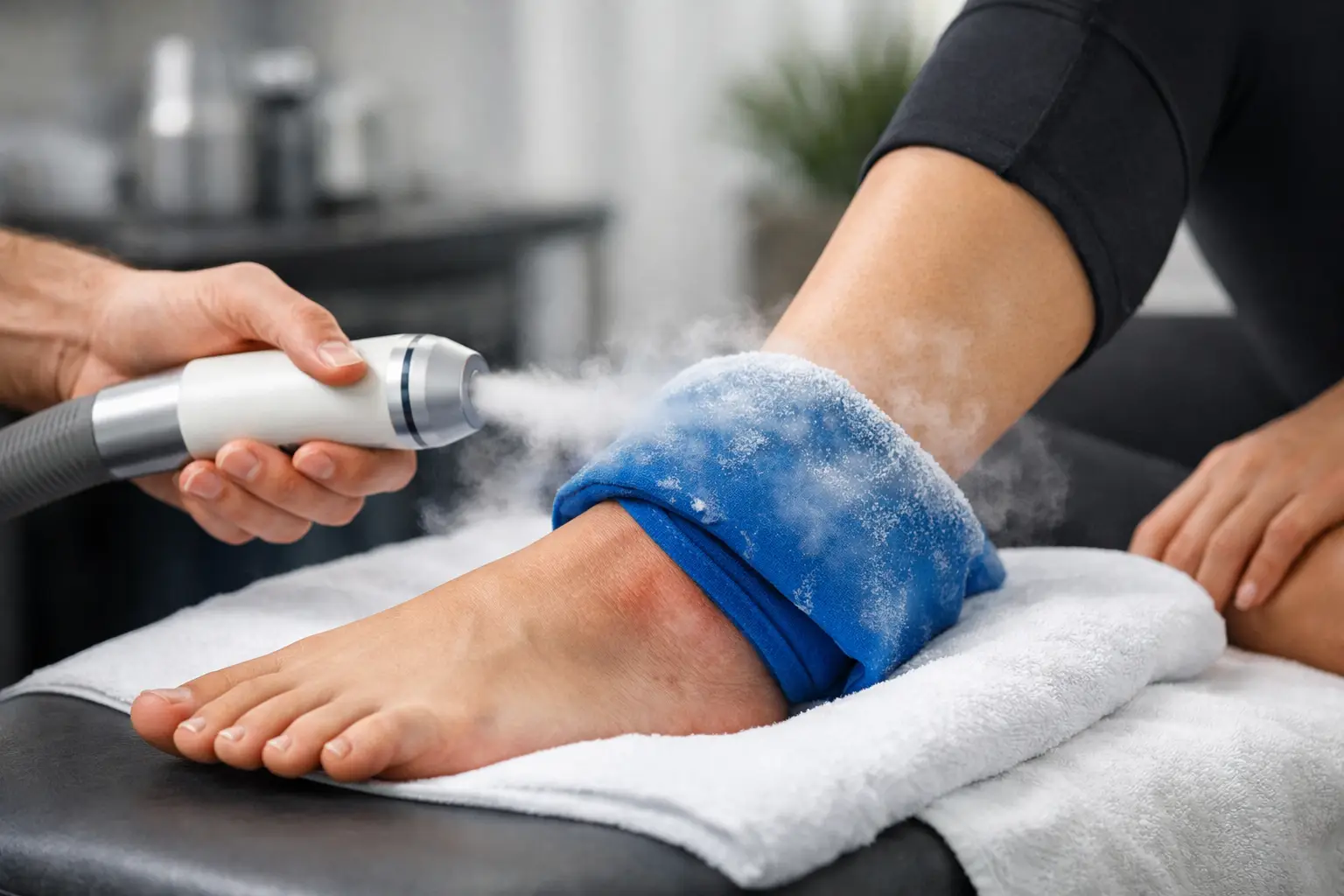
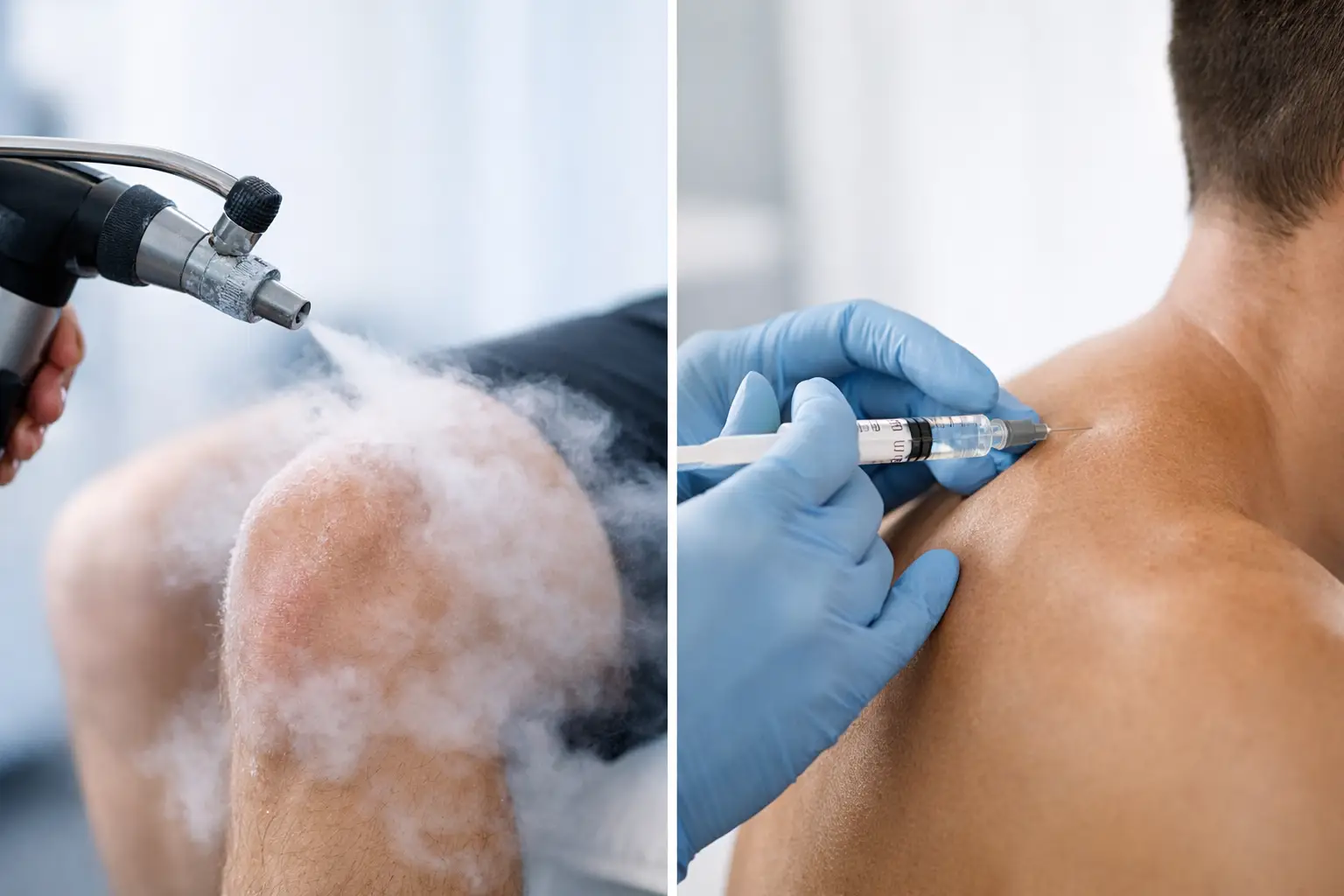
Localized cryotherapy applies controlled cold to a specific treatment area, such as a knee, shoulder, ankle, elbow, muscle group, or lower back. The cooling effect can temporarily decrease tissue temperature, calm the sensation of pain, and help manage post-exercise or injury-related soreness and swelling. A session is non-invasive, requires no needles, and typically has no downtime.
A steroid injection is a medical procedure performed by a qualified clinician. It delivers a corticosteroid medication, sometimes combined with an anesthetic, into or near a painful joint, tendon sheath, bursa, or other targeted area. Corticosteroids are designed to reduce inflammation, which may provide relief when inflammation is a significant driver of pain.
The key distinction is simple: cryotherapy offers a repeatable, external recovery tool, while a steroid injection is an internal medical intervention. Neither is automatically the better choice. The right path depends on what is causing the problem.
When Localized Cryotherapy Can Fit Your Recovery Plan
For active adults, localized cryotherapy is often appealing because it is quick, targeted, and easy to build into a regular routine. You can use it after training, during a demanding competition schedule, or when a nagging area needs supportive care without pausing your entire day.
Cold therapy may be a practical option for temporary relief from muscle soreness, minor strains, exercise-related joint discomfort, and localized swelling. It is also commonly used as supportive care during recovery after injury or surgery, when approved by the treating medical team. The goal is not to mask a serious issue and push through it. The goal is to make recovery more manageable while you follow the plan that addresses the underlying cause.
For many Miami clients, convenience matters as much as the modality itself. A localized session can be done at home, with no drive home after an appointment and no recovery period from a procedure. CryoNook brings targeted cold therapy to you, making it easier to stay consistent when pain, a busy schedule, or limited mobility gets in the way.
Cryotherapy can also be a smart first conversation for people who want to try a non-invasive option before considering medication-based procedures. That does not mean it replaces medical evaluation. New, severe, persistent, or worsening pain deserves a proper diagnosis.
What a Session Feels Like
Localized cryotherapy is intensely cold but brief. A trained provider directs cold air to the selected area while monitoring comfort and skin response. Most people describe a strong cooling sensation that becomes more tolerable as the area acclimates. Afterward, the area may feel refreshed, less achy, or easier to move, though results and duration vary.
There is no needle, no sedation, and no need to take time off work or training solely because of the session. That low-disruption profile is one reason people use cryotherapy between physical therapy visits, after workouts, or during periods of increased activity.
When Steroid Injections May Be Considered
Steroid injections are generally considered when a clinician has identified a condition where localized inflammation is likely contributing to symptoms. Depending on the diagnosis, this may include certain forms of arthritis, bursitis, tendon-related inflammation, or a flare that has not improved with conservative care.
For the right patient and condition, an injection can offer meaningful relief. It may reduce pain enough to make sleep, physical therapy, or normal movement more achievable. Some people experience relief quickly, while for others it takes several days. The duration is unpredictable. It can range from brief improvement to months of relief, and it is not a cure for structural damage or every type of pain.
The trade-off is that injections come with medical considerations. Possible side effects can include temporary pain after the injection, skin color changes, elevated blood sugar, infection, tendon weakening in some circumstances, and limits on how often a specific area should be injected. Repeated injections may not be appropriate for everyone, especially around certain tendons or joints.
That is why steroid injections should follow a clinical conversation, not a guess. Your clinician may recommend an exam, imaging, or a trial of other approaches first. They should also know about diabetes, immune conditions, blood-thinning medications, pregnancy, prior injections, and any history of infection.
Speed, Downtime, and the Reality of Results
If you need a fast, non-invasive way to support recovery after a tough training session or manage a familiar area of soreness, localized cryotherapy is usually the lower-commitment option. You can schedule a session, treat the target area, and continue with a modified version of your day. It works best as one piece of a smart routine that may also include rest, mobility work, hydration, strength training, and physical therapy.
If pain is being driven by a diagnosed inflammatory condition and conservative options are not doing enough, a steroid injection may offer a stronger medical intervention. However, it is not necessarily an instant return-to-sport pass. Your clinician may advise a period of reduced activity after the procedure, and the injection should be paired with the rehabilitation plan that helps prevent the issue from returning.
Both options can disappoint when the diagnosis is wrong. Cold therapy will not repair a full tear. A steroid injection will not correct poor movement mechanics, unstable joints, or a training load that keeps exceeding your capacity. Fast relief is valuable, but lasting progress usually requires addressing why the pain started.
How to Choose Between Them
Start with the pattern of your symptoms. If discomfort is mild to moderate, clearly linked to exercise or a known flare of soreness, and you want a non-invasive recovery option, localized cryotherapy may be a strong fit. It is especially useful for people who value frequent, targeted support without medication exposure or procedure recovery.
If pain is persistent, severe, unexplained, or affecting daily function, seek a medical assessment before self-treating it. Red flags include an inability to bear weight, major swelling after an injury, numbness or weakness, fever, a hot or red joint, chest pain, or pain that is steadily getting worse. Those situations need prompt clinical attention.
A steroid injection becomes a more relevant discussion after a clinician identifies a condition likely to respond to it and explains the expected benefit, alternatives, and risks. Ask practical questions: What exactly is being treated? How long might relief last? What activity restrictions apply? What happens if the pain returns? Those answers matter more than choosing the most aggressive-sounding treatment.
Can You Use Cryotherapy After a Steroid Injection?
Possibly, but timing and suitability should come from the clinician who performed the injection. They may recommend rest, gentle movement, physical therapy, or temporary activity changes based on the treatment area and diagnosis. Do not apply intense cold directly to a fresh injection site unless your provider says it is appropriate.
Over time, some people use localized cryotherapy as part of an ongoing recovery routine after they have been cleared for it. The role is supportive: helping manage day-to-day soreness and recovery demands, not replacing follow-up care or rehabilitation.
The best choice is the one that matches the problem in front of you. If you want practical, non-invasive support for a hard-working joint or muscle, localized cryotherapy offers a fast way to prioritize recovery. If your pain needs a medical procedure, get a clear diagnosis and a plan that looks beyond temporary relief. Your body performs better when treatment is precise, not rushed.